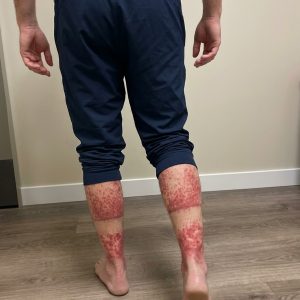
A young woman’s journey from unexplained suffering to a life-altering diagnosis reveals how easily serious illness can be missed when symptoms don’t follow a clear or familiar pattern. Sumbul Ari lived, by all outward appearances, a disciplined and healthy life. She trained consistently, stayed physically active through running, rowing, and powerlifting, and rarely experienced illness. Nothing in her medical history suggested anything concerning. So when her symptoms first appeared, neither she nor the doctors she consulted immediately considered anything serious. It began with persistent itching—an irritation with no visible cause. At first, it seemed harmless, possibly a reaction to soap, detergent, or an environmental trigger. She adjusted her routine, changed products, and tried to eliminate possible explanations one by one. But instead of improving, the sensation intensified, becoming impossible to ignore and eventually disrupting her sleep and daily functioning.
As time passed, more symptoms emerged, each one vague on its own but increasingly alarming in combination. Night sweats began to interrupt her rest, leaving her exhausted during the day. Fatigue crept in despite her fitness level. Appetite decreased, skin changes appeared, and mental fog made concentration difficult. She also experienced recurring minor infections that seemed disconnected from one another. Individually, each symptom could be attributed to stress, hormonal fluctuations, or minor illness, which made the overall picture harder to recognize. Early medical tests reportedly returned within normal ranges, reinforcing the assumption that nothing serious was occurring. She was treated for possible allergies, dryness, and skin conditions, but nothing provided lasting relief. The persistence of her symptoms, despite multiple interventions, created a growing disconnect between what she felt and what she was being told, leaving her increasingly isolated in her experience.
With no clear answers, she began searching for explanations on her own. This stage became both mentally exhausting and emotionally draining. She tried eliminating environmental factors, adjusting her diet, checking for mold, and experimenting with over-the-counter treatments. She also turned to online communities and anecdotal advice, hoping for patterns that matched her experience. Some remedies provided temporary relief, but none addressed the underlying issue. The lack of resolution deepened her frustration and self-doubt, especially as medical reassurance continued to suggest benign causes. Nights became particularly difficult, as the itching intensified and sleep became fragmented. Over time, the uncertainty itself became as distressing as the physical symptoms, creating a cycle of anxiety, exhaustion, and persistence.
The turning point came when a new symptom appeared that could no longer be dismissed: a noticeable lump in her neck. This shifted the situation from ambiguous discomfort to something visibly concerning. When she reviewed her symptoms together—persistent itching, night sweats, fatigue, appetite changes, cognitive fog, and now a physical mass—a clearer pattern began to emerge. It was this combination that ultimately led to suspicion of Hodgkin’s lymphoma. When the diagnosis was confirmed, it brought a complex emotional response. There was fear, but also relief—relief that her suffering had a name, that it had not been imagined, and that treatment could finally begin.
Once treatment started, her condition changed significantly. Chemotherapy brought gradual but noticeable improvement. The itching that had dominated her life began to fade, night sweats reduced, and other systemic symptoms slowly stabilized. Although treatment was physically demanding, it provided structure and clarity after months of uncertainty. Emotionally, it validated her persistence and reinforced the importance of trusting her own perception when something feels wrong, even in the absence of immediate answers.
Looking back, her experience highlights a broader reality within healthcare: serious conditions can be difficult to identify when they present with non-specific symptoms. Her journey underscores the importance of persistence, self-advocacy, and careful attention to changes in the body, even when early assessments appear normal. It also reflects the emotional toll of delayed diagnosis—the frustration, doubt, and isolation that can develop when suffering is not immediately understood. At the same time, her story demonstrates resilience and the importance of continuing to seek answers despite uncertainty. Ultimately, it serves as a reminder that symptoms should never be dismissed too quickly, and that listening to one’s body can be a critical step in reaching life-changing answers.