Threading a needle may appear to be one of the most basic steps in sewing, yet for many people it quickly becomes a surprisingly delicate and frustrating task, especially when dealing with fine needles, weak lighting, or threads that constantly split and fray. What experienced sewers often understand is that success in this small task depends less on force and more on technique, patience, and a few clever adjustments that make the process smoother and more reliable. Over time, generations of home sewers have developed simple but highly effective methods that turn a difficult moment into something quick and almost effortless, relying not on specialized tools but on everyday household items and an intuitive understanding of how thread behaves. These traditional approaches, often passed down informally through families, reflect a deep practical knowledge built through repetition and observation rather than formal instruction, showing how small domestic challenges often inspire creative solutions that endure for decades. One of the most resourceful methods involves using a common household item such as a toothbrush to assist in guiding the thread into the needle. By laying the thread across the bristles and gently pressing the eye of the needle against them, the fibers are encouraged to align and pass through more easily, as the bristles help stabilize and direct the thread rather than allowing it to bend or slip away. This simple trick works particularly well with fine needles where precision is difficult to achieve with fingers alone, and it reduces the repeated frustration of missed attempts. Another similarly inventive approach makes use of discarded plastic packaging such as empty blister packs, where a small slit or channel can be used to hold the thread steady while the needle is guided through it. The rigidity of the plastic helps keep the thread in place, preventing it from splitting or collapsing during insertion, which is especially useful when working with delicate materials like silk or lightweight synthetic fibers. This method demonstrates how everyday waste items can be repurposed into practical tools, reflecting a mindset of creativity and efficiency in the sewing process. Alongside these mechanical aids, one of the oldest and most widely used techniques remains the simple act of slightly moistening the tip of the thread before attempting to pass it through the needle’s eye. Whether done with water or a small amount of saliva, this method works by compressing the fibers together, reducing fraying and creating a firmer, more pointed end that is easier to guide through the tiny opening. Although it may seem insignificant, this small adjustment can dramatically improve success rates, especially with threads that tend to unravel quickly. It also highlights how much sewing relies on subtle physical changes and tactile awareness rather than force or complexity. Another helpful approach involves using a thin strip of paper or soft fabric wrapped around the thread’s end, effectively creating a temporary stiff guide that can be pushed through the eye of the needle before the thread follows. This method is particularly useful for individuals who struggle with fine motor control or reduced vision, as it reduces the need for precise alignment and allows for a more forgiving, guided motion. The paper or fabric acts as a bridge between the thread and the needle, simplifying what would otherwise require steady hands and sharp eyesight. Together, these techniques demonstrate that threading a needle is not just a mechanical action but a skill shaped by observation, adaptation, and experience. They reveal how generations of sewers have quietly refined simple solutions that transform a frustrating task into something manageable and even satisfying, using nothing more than patience, everyday materials, and a deep understanding of how small details influence success.

Related Posts

“Teen Girl Discovers $10 Million Inheritance After Neglect, Saved By Legal Intervention, Escapes Family Abuse, And Begins New Life With Proper Care And Support”
I never told my parents about the inheritance my grandmother left behind, not because I was hiding something out of fear, but because I had already learned…
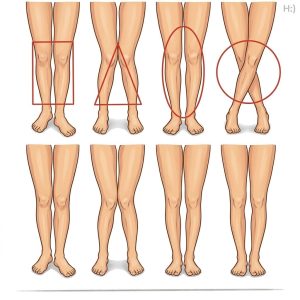
“Body Language And Leg Positioning: How Posture, Movement, And Stance Reflect Comfort, Confidence, And Nervousness, And Why Context Matters More Than Fixed Meanings”
Human body language is a rich and complex system of nonverbal communication that extends well beyond facial expressions, hand gestures, or vocal tone, with the lower body—especially…

“Beyond The Mirror: What Your Favorite Lipstick Color Reveals About Personality, Confidence, Emotional Signals, And Self-Expression Through Beauty Choices”
Lipstick has long moved beyond its original function as a simple cosmetic product, becoming instead a subtle but powerful form of personal expression that blends identity, emotion,…

“When Night Falls, An Owl May Be Watching: Exploring Nocturnal Hunting, Silent Flight, Sharp Vision, And Hidden Wildlife Living Around Your Home At Night”
On dark and quiet nights, when human activity fades and the world seems to slow down, the owl emerges as one of nature’s most fascinating nocturnal creatures….

“Seven Scents Snakes Hate: Cinnamon, Clove, Garlic, Citrus, Peppermint, Ammonia, And Sulfur As Natural Repellents For A Safer Snake-Free Home Environment”
Snakes have long inspired a mix of fear, respect, and curiosity, especially in regions such as Skopje, where occasional encounters with species like Vipera ammodytes or Natrix…
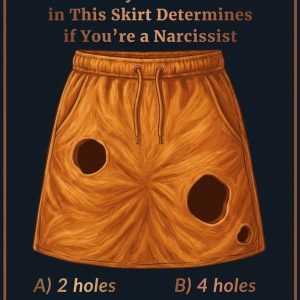
“How Many Holes You See In This Skirt: A Visual Test Claiming To Reveal Personality Traits, Perception Patterns, And Psychological Tendencies”
Internet puzzles have a unique way of transforming ordinary objects into extended debates, and the well-known skirt puzzle is a clear example of how something visually simple…