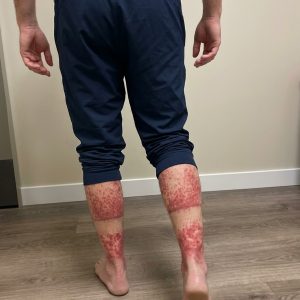
What began as a simple visit to a barbershop turned into a troubling experience for a 27-year-old man, showing how even routine activities can carry hidden risks when hygiene is not properly maintained. Like many people, he expected nothing more than a regular haircut and a quick refresh to his appearance. The shop looked normal—clean surfaces, organized tools, and a familiar environment—but within days, subtle changes appeared on his skin. At first, there was only mild irritation, a slight burning sensation, and a few small bumps that seemed easy to ignore. These symptoms resembled common post-shave reactions, so there was no immediate cause for concern. However, as time passed, the irritation worsened, the bumps multiplied, and swelling became more noticeable, turning what seemed minor into something that could no longer be dismissed.
When the condition continued to progress, he sought medical help and was diagnosed with bacterial folliculitis. This condition occurs when bacteria enter hair follicles, often through tiny cuts or abrasions caused during shaving. In environments like barbershops, where tools are used on multiple clients, the risk increases if proper sanitation is not followed. Clippers, razors, and scissors can carry bacteria if they are not disinfected thoroughly between uses. While folliculitis is generally treatable, it can become more severe if ignored, spreading across the skin, causing pain, and potentially leading to scarring. This situation highlights how the skin, despite being a strong protective barrier, can become vulnerable when exposed to contaminated tools.
The progression of the infection showed how quickly it can escalate. What started as small, itchy bumps developed into clusters of inflamed follicles, creating discomfort that affected daily activities like washing, dressing, and even sleeping. Beyond the physical symptoms, there is also a psychological impact. Experiencing an infection from a place that is usually considered safe can create anxiety and reduce trust in routine services. This case reflects a broader issue, as barbershops and similar environments depend heavily on consistent hygiene practices. When these standards are not strictly followed, even unintentionally, they can pose risks not just to one individual but to many clients.
Treatment required careful medical attention, often involving antibacterial creams or medications, along with proper skin care. Avoiding scratching or further irritation was essential to prevent the infection from spreading. Recovery can take time, and patience is necessary to allow the skin to heal fully. At the same time, this experience emphasizes the importance of prevention. Simple actions, such as ensuring tools are properly sanitized, using disposable items when possible, and observing the overall cleanliness of the environment, can significantly reduce risk. Awareness does not mean distrust—it means being attentive to personal health and safety.
The situation also highlights the shared responsibility between professionals and clients. Barbers and grooming specialists are expected to follow hygiene standards, but clients can also play a role by paying attention to practices and asking questions when necessary. Small details, such as whether tools are cleaned between customers, can make a significant difference. These precautions may seem minor, but they are essential in preventing infections like folliculitis.
In the end, this experience serves as a reminder that everyday routines are not entirely risk-free. A simple haircut can become a health issue when hygiene is overlooked. By staying aware, observing conditions, and acting quickly when symptoms appear, individuals can protect themselves and maintain confidence in personal care services. Prevention, attention to detail, and timely action remain the most effective ways to ensure that routine experiences stay safe and uneventful.