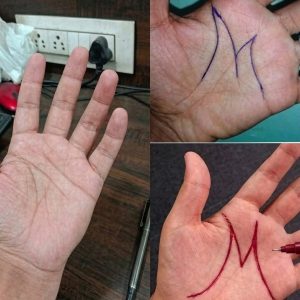
The idea that finger length might reveal aspects of personality is often connected to what researchers refer to as the “2D:4D ratio,” a comparison between the length of the index finger (2D) and the ring finger (4D). This concept originates from studies in developmental biology and psychology that examine how prenatal hormone exposure, particularly testosterone and estrogen, may influence physical traits during early development. According to this theory, the balance of these hormones before birth could play a small role in shaping both physical characteristics and certain behavioral tendencies later in life. However, this area of research remains ongoing, and findings are not definitive. While some studies suggest possible correlations, others show weak or inconsistent results, making it clear that this ratio should not be treated as a reliable way to define personality.
In some interpretations, a longer ring finger compared to the index finger is associated with a lower 2D:4D ratio. This has been loosely linked to higher exposure to prenatal testosterone. Within certain studies, this pattern has been connected to traits such as confidence, competitiveness, and a tendency toward risk-taking. Individuals described in this way are sometimes thought to thrive in environments that require quick decisions and adaptability, such as business or performance-driven settings. However, these associations are based on statistical observations rather than fixed rules. Many people with this finger pattern may not exhibit these traits at all, while others with different ratios may display them strongly. Personality is shaped by a wide range of influences, including upbringing, environment, and personal experience, making it impossible to draw firm conclusions from finger length alone.
When the index finger appears longer than the ring finger, it is often linked to a higher 2D:4D ratio and relatively lower prenatal testosterone exposure. In these interpretations, individuals are sometimes described as more cautious, analytical, and thoughtful in their decision-making. They may prefer structured environments where planning and attention to detail are valued. This group is also occasionally associated with strong communication skills and the ability to approach situations with patience and care. As with the previous category, these descriptions are broad generalizations and should not be seen as accurate predictors of personality. The variation between individuals is significant, and no single physical trait can reliably determine behavior or preferences.
For those whose index and ring fingers are similar in length, some interpretations suggest a more balanced ratio. This balance is sometimes associated with adaptability and a mix of traits, allowing individuals to shift between careful analysis and decisive action depending on the situation. They may be seen as flexible, cooperative, and capable of working well in team settings. Despite these appealing descriptions, there is no consistent scientific evidence supporting a direct link between finger symmetry and specific personality traits. The complexity of human behavior extends far beyond what such a simple measurement can explain.
It is also important to recognize the limitations of the research behind the 2D:4D ratio. Studies in this field often produce mixed results, with some finding small correlations and others finding none. Even when patterns are observed, they tend to be weak and influenced by many external factors. This suggests that while prenatal hormones may have some influence on development, they are only one part of a much larger picture. Genetics, environment, education, and life experiences all interact to shape personality in ways that cannot be reduced to a single biological marker.
Ultimately, the 2D:4D ratio is best understood as an საინტერესო scientific idea rather than a definitive explanation of personality. It highlights the broader effort to explore how biology and behavior might be connected, but it should not be overstated. Personality is dynamic and influenced by countless factors over time. Finger length, while interesting to observe, does not determine who a person is or how they will think, feel, and act.