At just twenty-eight, Georgie Swallow was living what many would consider a fast-paced, ambitious life in London, fully immersed in her work as a content producer and focused on building her career. Like a lot of people in their twenties, she naturally assumed that serious illness was something distant, associated with later stages of life rather than something that could quietly develop in the background of an otherwise busy routine. When her body began sending small signals that something wasn’t right, she interpreted them through the lens of stress, workload, and exhaustion rather than potential illness. Fatigue felt like burnout, discomfort felt like overwork, and anything unusual seemed temporary. That mindset, while understandable in a culture that often normalizes being constantly busy, meant that important warning signs were easy to dismiss. In reality, what seemed like minor, everyday issues were part of a much deeper health problem that was gradually progressing without obvious alarm. Her experience reflects how easily assumptions about age and wellness can delay attention to serious symptoms, especially when life feels too full to pause and question them.
In the early stages, the signs were subtle enough to blend into normal life. Persistent tiredness was the first noticeable change, but in a world where exhaustion is often treated as a badge of productivity, it didn’t immediately raise concern. Work demands, social commitments, and general lifestyle pressures made it feel almost expected. Alongside this came vague discomfort that was easy to rationalize, followed by the discovery of a lump in her neck, which she initially assumed was something minor like a swollen gland. The hesitation to seek medical help was not unusual; many people delay appointments when symptoms feel unclear or not severe enough, often worried about seeming overly anxious or wasting time. This internal doubt contributed to a longer period of uncertainty, allowing the underlying condition to continue developing while being repeatedly explained away as something harmless or temporary.
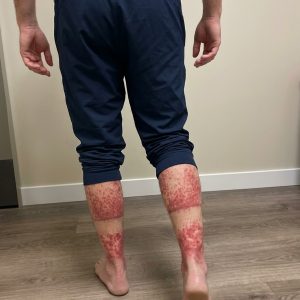
As time went on, three symptoms became more difficult to ignore, even though they still did not clearly point toward something life-threatening. Intense itching, especially in the legs, began to interfere with sleep and daily comfort. Severe night sweats disrupted rest and left her waking repeatedly through the night, exhausted and unsettled. At the same time, fatigue deepened into something constant and unrelenting, no longer tied to workload or rest. While each symptom on its own could easily be attributed to stress, allergies, or hormonal changes, together they created a pattern that was harder to explain. Despite medical consultations and attempts at treatment, there was no clear improvement, and additional signs such as weight loss and lowered immunity began to appear. Even then, the lack of a single, obvious cause made it easy for the situation to remain misinterpreted.
Eventually, Georgie was diagnosed with Hodgkin lymphoma, a cancer affecting the lymphatic system that can develop gradually and silently. By the time it was identified, the disease had already reached an advanced stage, which made the diagnosis even more confronting. Symptoms that once felt ordinary were now understood as early warning signs that had been missed or dismissed. One of the challenges with this type of illness is that its symptoms often overlap with far more common conditions, which makes early detection difficult, especially in young and otherwise healthy individuals. Her diagnosis highlighted how easily serious conditions can remain hidden behind familiar, everyday experiences.
Treatment was intensive and physically demanding, involving aggressive therapies aimed at controlling the disease. While it was ultimately successful, it also brought lasting consequences, including early menopause caused by chemotherapy. This created an additional emotional layer to recovery, as it affected fertility and future family planning at a time when such considerations had not yet fully taken shape. The experience of navigating these changes while peers continued with different life paths added a sense of isolation that extended beyond the physical illness itself.
Now in her early thirties, Georgie shares her story to encourage greater awareness of persistent symptoms and the importance of trusting one’s instincts when something feels wrong. Her experience serves as a reminder that serious illness does not always present in obvious ways and that listening to the body, even when signs seem small, can make a significant difference in outcomes and timing of diagnosis.